
A finished office is never defined by walls and lighting alone. The daily experience of the space depends on what people touch, sit on, work at, gather around, and see from the moment they enter. In this completed project at The Opus by OMNIYAT, Dubai, our work focused on exactly that layer: office furniture and decoration chosen to support the look of the interior while making the workspace practical for the people using it every day.
For companies searching for office furnishing in Dubai, this project is a clear example of how furniture selection can shape the tone of an entire office. The project included the main working area, executive rooms, manager spaces, reception, and waiting zones. Each area needed its own balance of comfort, image, and daily usability, but all of them had to feel connected as one workplace.
A furnishing project designed for the way the office operates
The office interior already had a very defined architectural language. There were sharp black frames, wide glass partitions, warm timber finishes, large planes of stone, and slatted ceiling details that gave the space a refined contemporary identity. Our role was to furnish that environment in a way that felt fully in tune with it.
That meant avoiding furniture that looked random, bulky, or too generic. In a project like this, office furnishing in Dubai cannot rely on placing desks and chairs in empty rooms and considering the job finished. The furniture has to support workflow, privacy, guest experience, visual balance, and brand image at the same time.
In this project, every category of furniture had a clear purpose. Workstations had to support team productivity without making the open office feel crowded. Executive offices had to feel polished and private while still welcoming visitors. The reception and waiting areas had to set the tone from the first minute, giving clients and guests an immediate sense of professionalism and care.
Main working area: structure, focus, and a clean visual rhythm
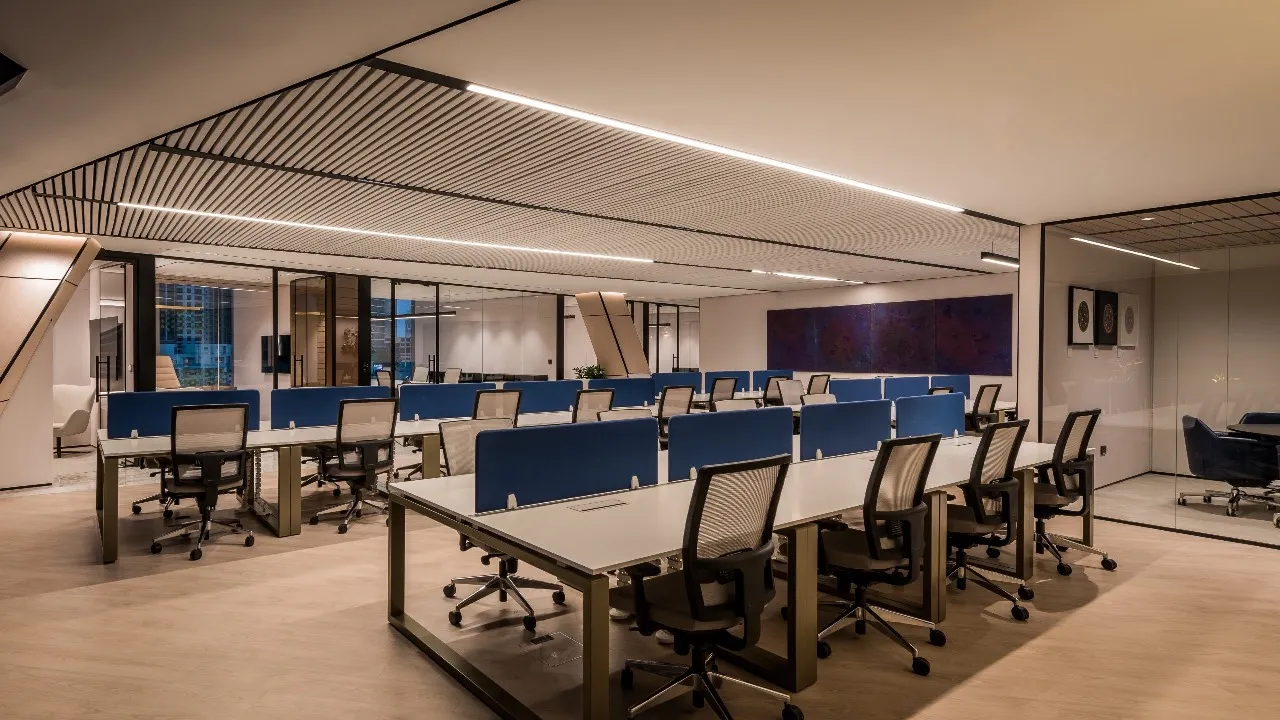
The main open office required a furnishing approach that could handle repetition without becoming monotonous. The solution centered around long shared workstations with clean white desk surfaces, dark metal frames, ergonomic mesh task seating, and blue privacy screens.
This combination worked on several levels.
The white desktops kept the working zone light and crisp. In a large open office, dark desk surfaces often make the center of the room feel visually dense. Here, the lighter tops reflected the ambient light and helped the work area feel spacious and active.
The blue divider screens played a very important role. They introduced color into the office in a controlled way, but their function was equally valuable. They gave each person a clearer work zone, reduced visual distractions at seated level, and created a sense of order across the rows of desks. At the same time, they stayed low enough to preserve the open plan feeling. This helped the office feel collaborative rather than boxed in.
The task chairs were selected with the same logic. Mesh-backed seating kept the repeated chair layer visually light, which matters a lot in an office with many workstations. The black chair frames linked nicely with the black architectural detailing, while the pale mesh softened the overall look. These chairs also supported long working hours, mobility, and comfort, which is essential for a real workplace rather than a showroom.
One of the reasons this area works so well is that the furniture supports the architecture instead of fighting it. The slatted ceiling and linear lighting create strong direction overhead. The workstation layout answers that with long desk lines and neatly arranged seating below. The result is a working space that feels organized, efficient, and visually calm.
For businesses looking into office furnishing in Dubai, this part of the project shows how open-plan furniture should do two things at once: improve the day-to-day working experience and contribute to a polished, client-ready interior.
CEO office: privacy, authority, and a softer meeting zone
The CEO office was furnished to feel distinct from the open workspace, but not disconnected from it. The room needed a more private and refined atmosphere, while still fitting into the same material and design family as the rest of the office.
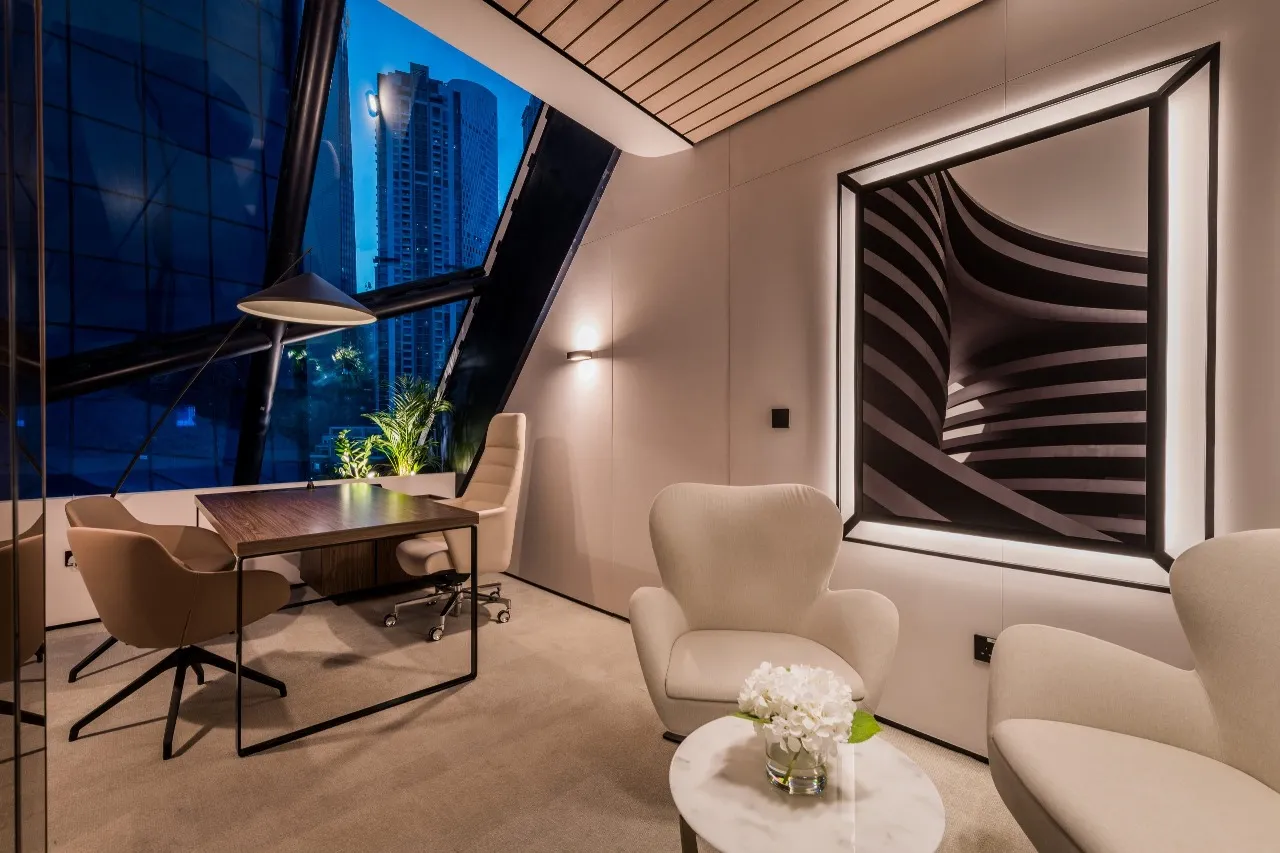
The main executive desk was positioned near the window so the skyline became part of the room experience. Instead of choosing a bulky desk that would dominate the office, we selected a piece with a broad wood surface and a slimmer dark frame. That kept the room elegant and composed. The desk had presence, but it did not overwhelm the architecture or the view.
Behind it, the high-back executive chair established the primary seating position in a clear and professional way. In front of the desk, the guest chairs had a warmer and more approachable character. Their lower profile and rounded form made meetings feel comfortable while still maintaining the right level of formality.
An important part of this office was the separate lounge corner. Two upholstered lounge chairs with a small round stone coffee table between them created a second meeting mode within the room. This kind of arrangement is valuable in executive spaces because not every conversation should happen across a desk. The lounge area allows for quieter discussions, less rigid meetings, and a more welcoming experience for visitors.
The decorative elements in the room were kept focused and precise. A large illuminated artwork panel gave the office a strong focal point and tied in with the sharp, architectural mood of the room. The furnishing around it remained soft enough to keep the office from feeling severe. This balance is often what defines a successful executive office furnishing project.
Manager office: refined, practical, and ready for daily interaction
The manager office followed a similar direction to the CEO room, but with a slightly more direct and work-focused character. Here again, the furnishing had to support several patterns of use: daily desk work, one-to-one meetings, shorter review sessions, and private conversations.
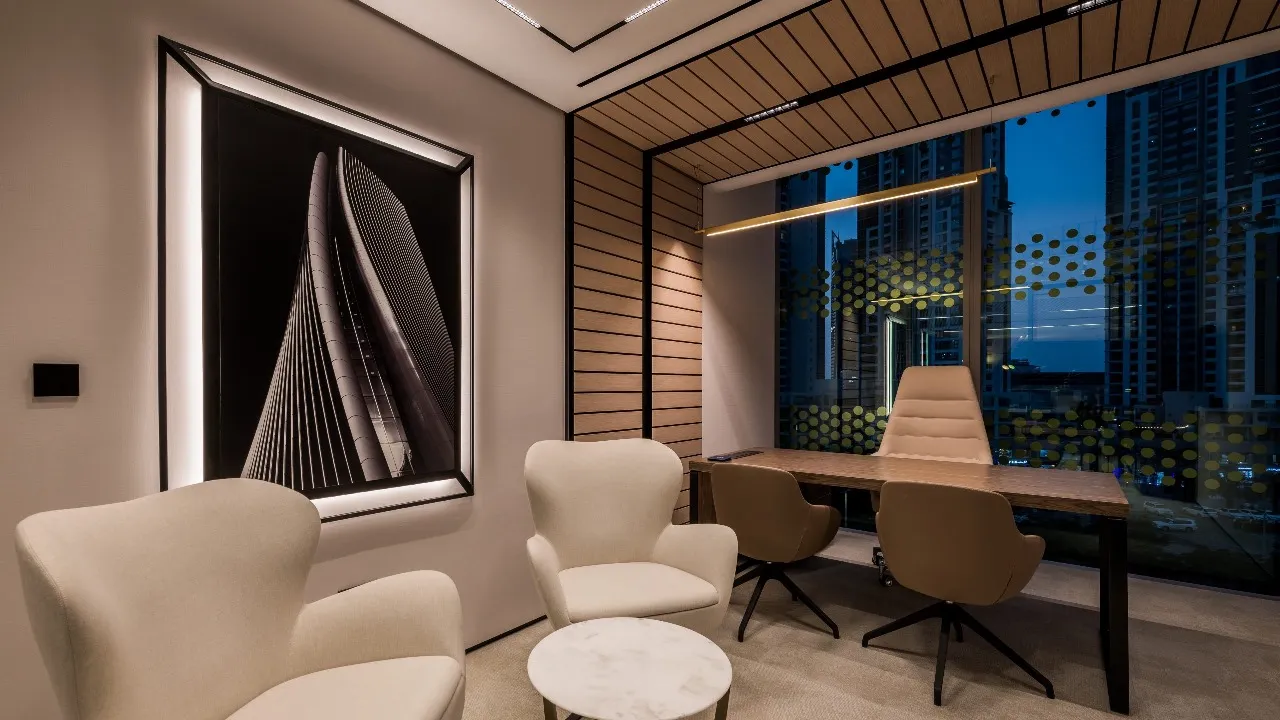
The manager desk was clean-lined and modest in profile, offering enough working surface without adding visual weight. The manager’s chair provided the comfort needed for long use, while the guest chair kept the front-of-desk meeting position professional and neat.
Just like in the CEO office, a softer seating corner was added. Two cream lounge chairs and a small round table helped create another layer of function within the room. This arrangement supports conversations that feel less formal than desk meetings, which is especially useful in a manager’s office where team discussions often require a more relaxed setting.
A sculptural floor lamp and illuminated wall artwork gave the room a more finished and personal look. These decorative pieces were not placed simply to fill empty corners. They helped connect the work zone with the seating zone and gave the office more warmth and identity.
In office furnishing in Dubai, rooms like this often need careful control. If the furniture becomes too heavy, the office feels rigid. If it becomes too casual, the room loses its professional tone. In this project, the balance stayed clear: polished, contemporary, comfortable, and fully usable.
Reception and waiting areas: the first impression starts with furniture
Reception and waiting spaces shape the first emotional response to an office. In this project, those areas were furnished to feel refined, welcoming, and fully aligned with the rest of the office.
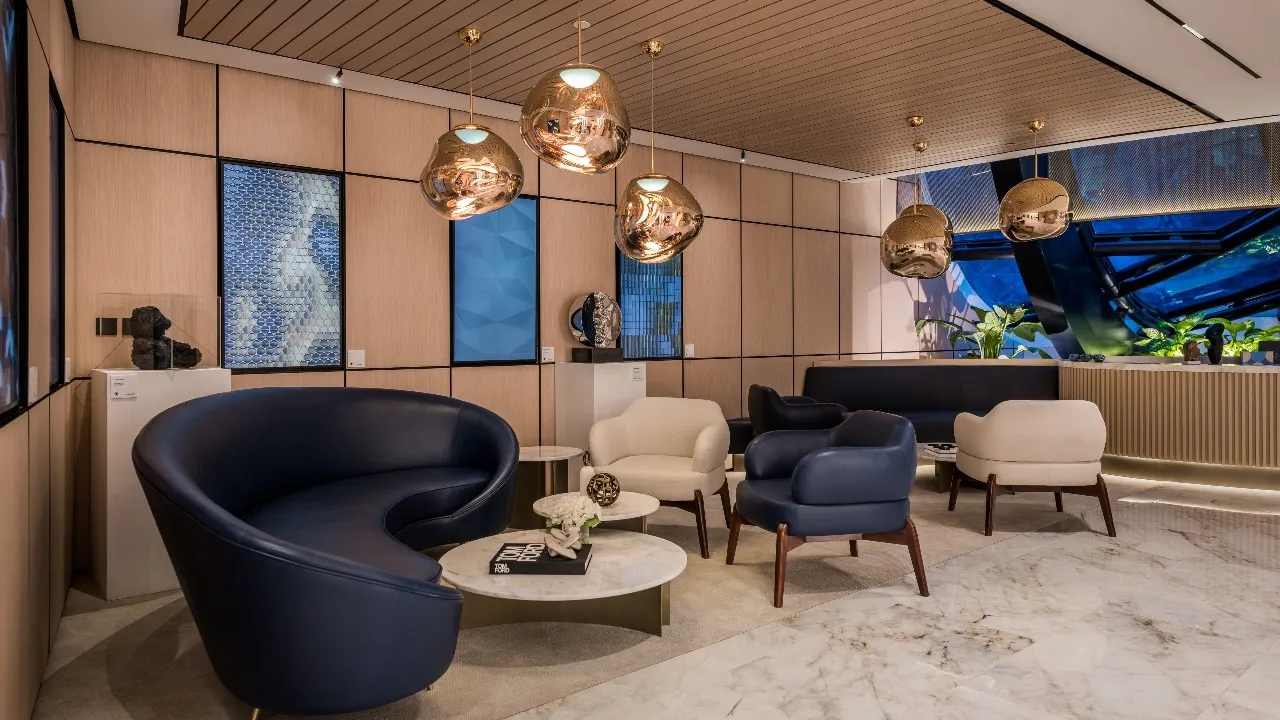
The seating composition was built around curved dark sofas, upholstered lounge chairs in deep blue and soft cream tones, and round coffee tables with stone tops. This gave the waiting area a hospitality quality that suited the architecture and the client-facing nature of the office.
The curved sofa forms were especially valuable because they softened the strict panel lines, glass edges, and ceiling geometry around them. Their shape made the lounge feel less formal and less static than a row of standard reception seats. Visitors could wait, meet, or have a short conversation in a setting that felt carefully designed rather than improvised.
The cream chairs introduced brightness and visual relief between the darker upholstery pieces. They made the lounge grouping feel lighter and more welcoming, while the dark blue seating helped the room maintain depth and presence.
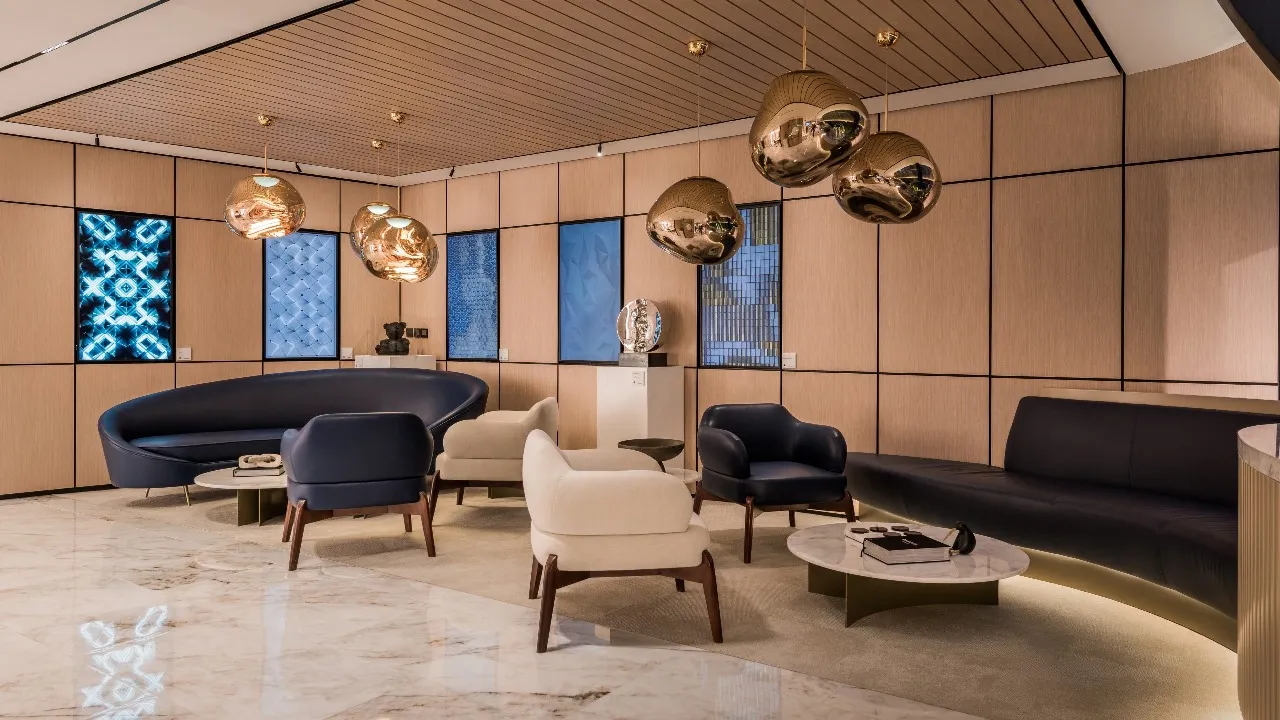
The reception desk itself was treated as part of the furnishing concept, not only as a service counter. Its curved profile and fluted front tied in with the linear detailing elsewhere in the interior. The desk looked integrated into the overall design language of the office, which is exactly what a reception piece should do in a premium Dubai commercial interior.
Round tables completed the waiting zone with practical surface area for small items, drinks, or reading material. Their shape also improved movement around the seating arrangement, which is an important detail in front-of-house spaces.
A completed office furnishing project in The Opus by OMNIYAT, Dubai
This project at The Opus by OMNIYAT, Dubai, reflects the kind of furnishing approach we believe in: one where office furniture and decoration are selected with attention to design language, user comfort, and real workplace function.
From the open workstation area to the executive rooms and reception lounge, the furnishing was planned to support how the office looks, how it feels, and how it operates every day. The result is a workplace that feels cohesive, polished, and ready for both staff and visitors.
For companies looking for office furnishing in Dubai, this project shows the value of a complete and well-coordinated approach. The right furniture choices can help define the identity of the office, improve how teams work, and give clients a strong first impression from the moment they walk in.