
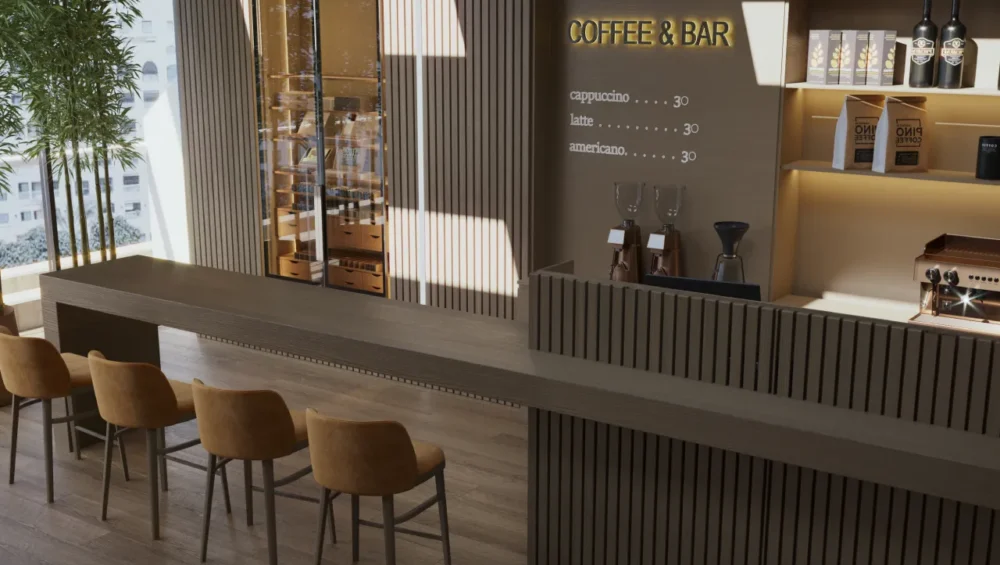
A hotel lounge has a special role inside a hospitality project. It is often the first place where guests slow down after arrival, wait before a meeting, take coffee in the morning, meet someone in the afternoon, or spend a short evening moment before returning to their room. Because of that, the interior has to support many kinds of use at once. It must feel welcoming, visually memorable, practical for hotel operations, and consistent with the identity of the property.
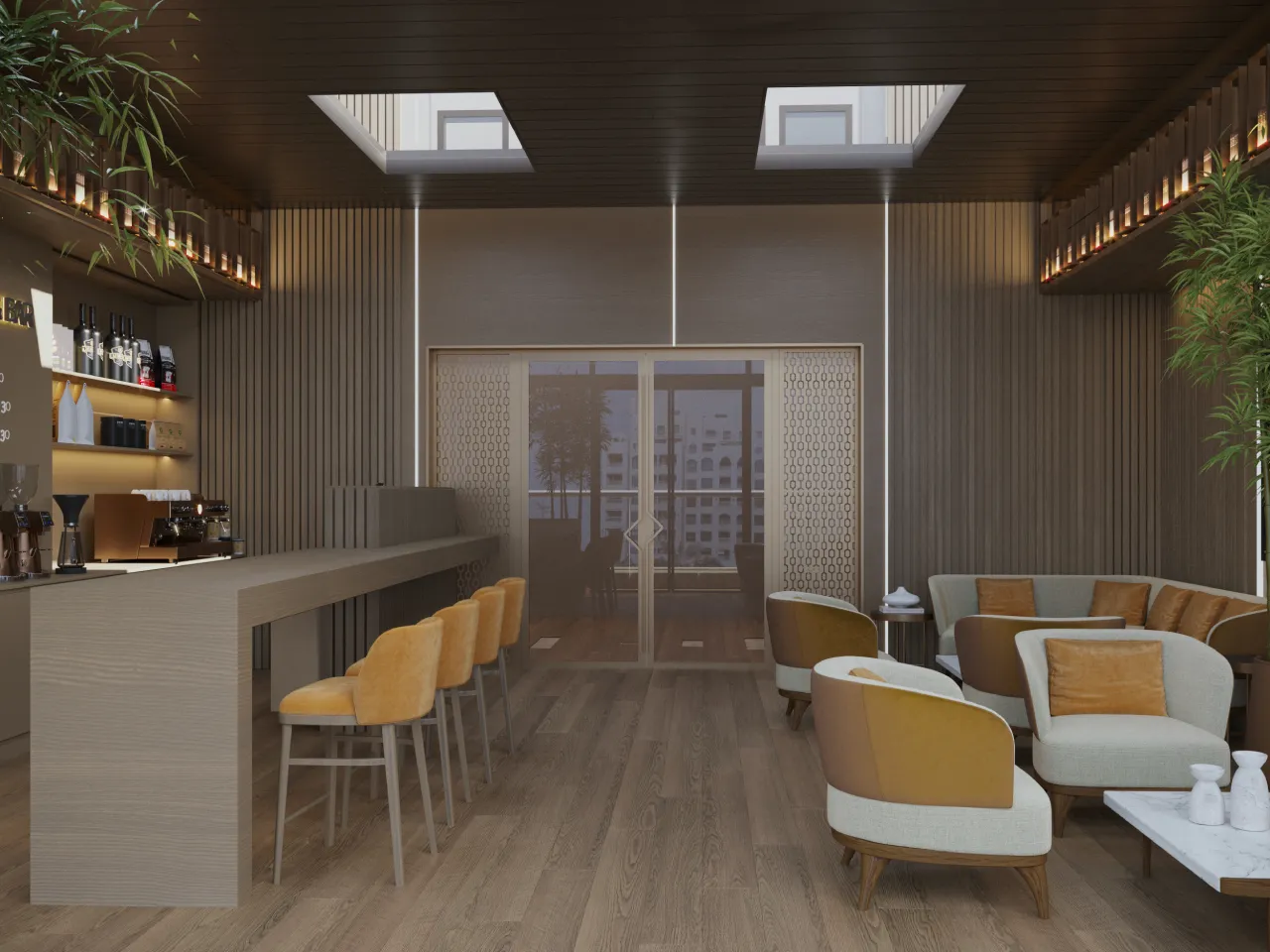
This hotel lounge design is developed as a modern coffee and bar environment with a warm boutique atmosphere. The space combines lounge seating, a long service counter, bar stools, product display, decorative lighting, architectural wall paneling, greenery, skylights, and large city-facing windows. The result is a hotel lounge that feels comfortable for guests but still polished enough for a premium hospitality setting.
The design does not depend on heavy decoration. Instead, the atmosphere comes from proportion, repetition, lighting, material contrast, and the way each zone connects to the next. The lounge uses a restrained palette of taupe wood, warm grey-brown surfaces, soft beige upholstery, caramel cushions, dark metal details, bronze-toned accents, white marble tabletops, and warm integrated light. These elements create a modern interior that feels grounded, professional, and inviting.
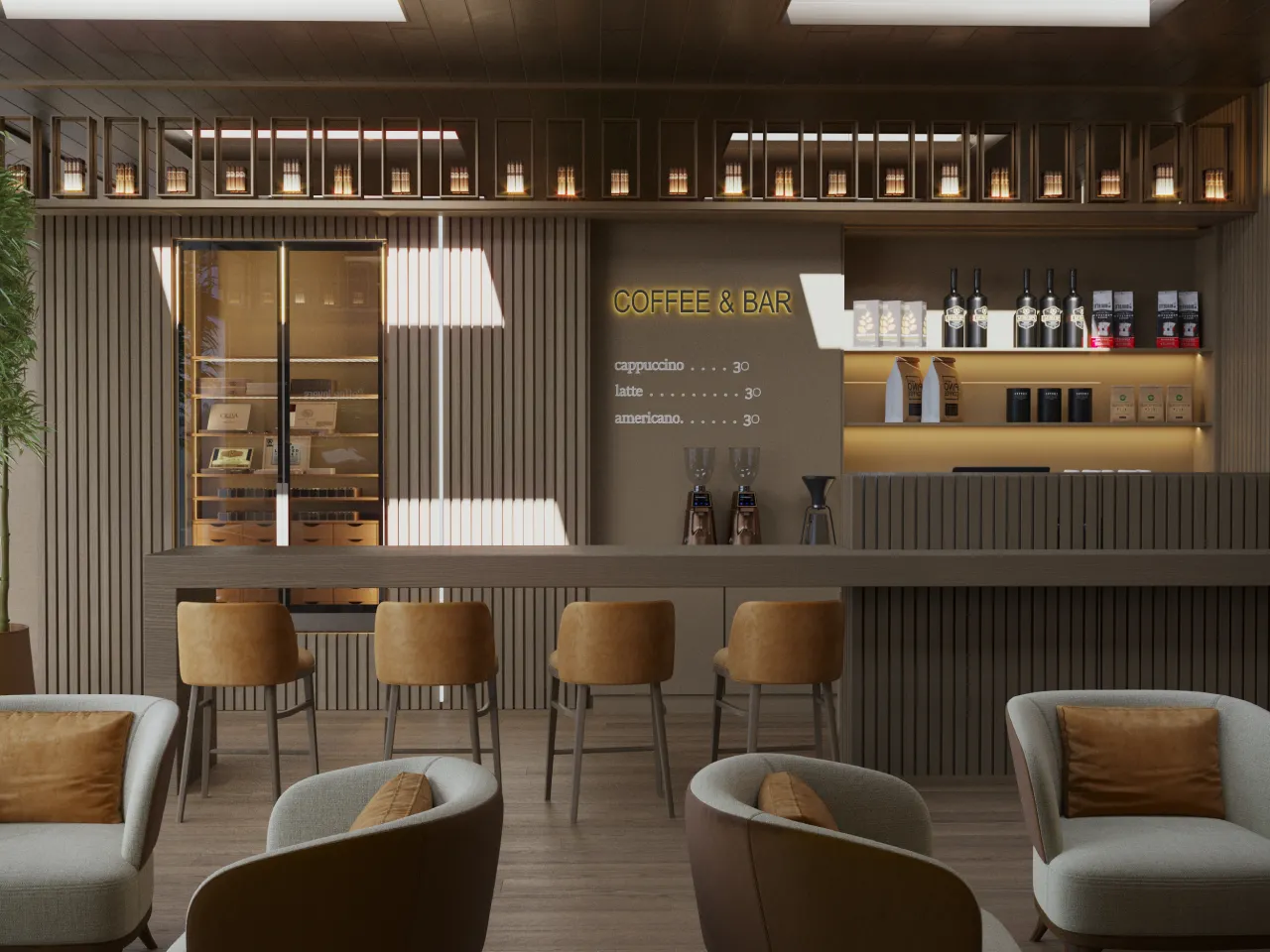
Project Design Concept
The main design idea behind this lounge is the combination of a coffee bar and relaxed hotel seating within one continuous room. Rather than treating the bar as a separate functional corner, the service counter becomes part of the architectural composition. The seating area, wall treatment, lighting, floor finish, and product displays all follow the same visual language, so the room feels planned as one complete environment.
The concept relies on three main design principles:
First, vertical rhythm.
The lounge uses slim vertical slats on the walls, bar front, display cabinet surround, and architectural surfaces. This detail gives the room texture without adding visual clutter. It also creates a sense of height and order, which is useful in a long hospitality space.
Second, warm layered lighting.
The lighting is not limited to ceiling fixtures. It appears in upper lantern structures, backlit signage, under-shelf lighting, display cabinet lighting, wall-edge highlights, skylights, and large windows. This gives the lounge atmosphere during different parts of the day.
Third, soft furniture against architectural structure.
The built-in elements are linear and disciplined, while the furniture has curved backs, rounded arms, soft upholstery, and warm cushions. This contrast makes the lounge feel modern but not cold.
Layout: A Lounge Designed for Different Guest Behaviors
The room layout is organized with a clear division between the service side and the lounge side. On one side, the long coffee and bar counter creates a functional edge. On the other side, curved sofas and lounge chairs form smaller seating groups. This gives hotel guests different options depending on how they want to use the space.
Some guests may sit at the bar counter for a quick coffee. Others may choose the sofas for conversation, waiting, or informal work. The armchairs allow more private seating moments, while the low tables support drinks, books, laptops, and decorative objects.
This flexibility is important in hotel lounge interior design. A hotel lounge cannot be designed only for one activity. It has to work during breakfast hours, check-in periods, casual meetings, coffee breaks, and evening service. This design answers that need by creating zones that feel connected but not identical.
The long room proportion is handled carefully. The bar counter gives the space direction, while the seating clusters break the length into smaller human-scaled areas. The greenery and furniture placement soften the room so it does not feel like a corridor. The large glass openings at the ends and sides also help extend the perception of the interior.
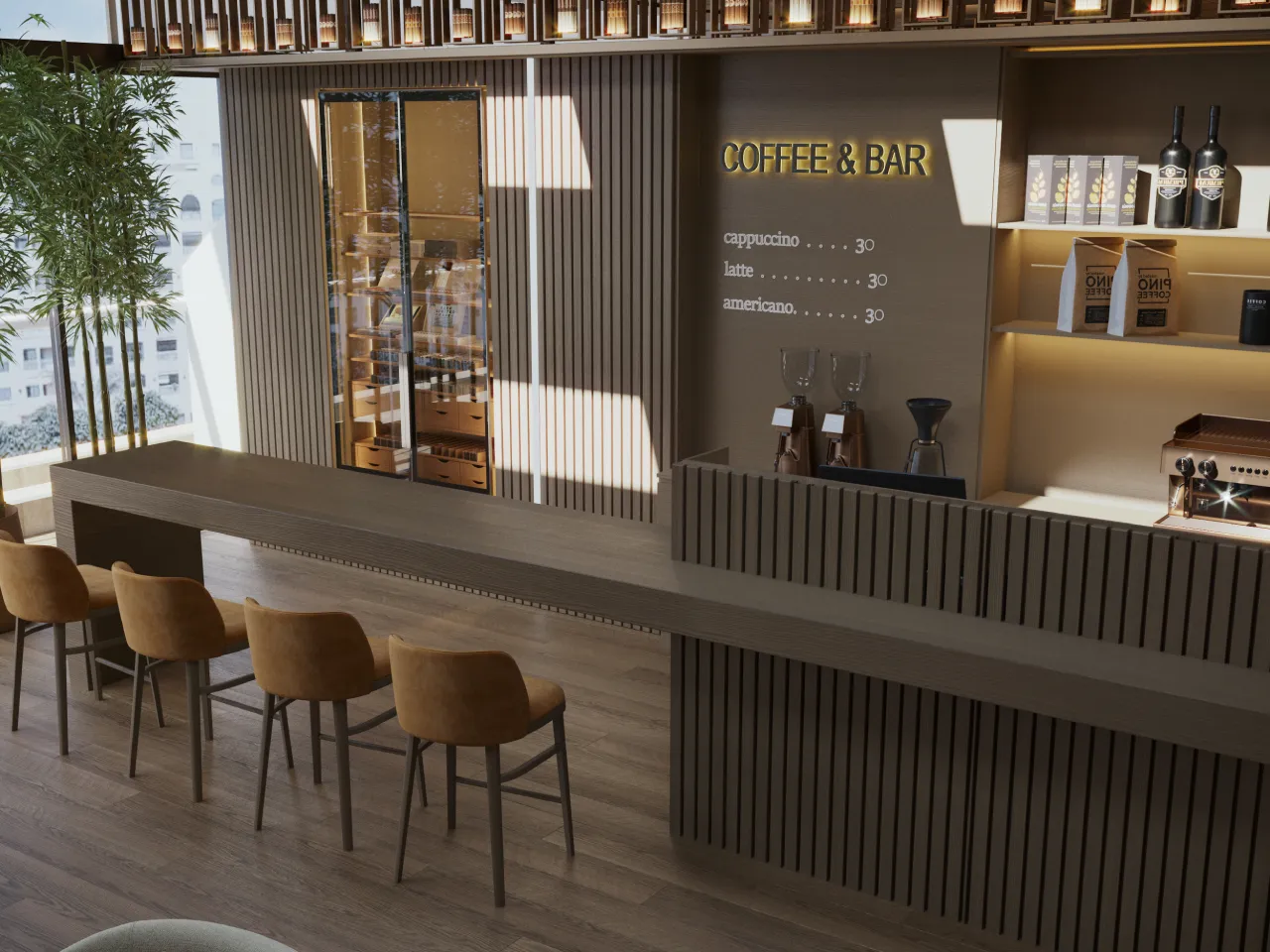
The Coffee & Bar Counter as the Main Feature
The coffee and bar counter is the functional center of the project. It stretches along one wall and creates a clear service area for drinks, coffee preparation, product display, and guest seating.
The counter has a substantial built-in appearance. Its thick horizontal surface and slatted front panel make it feel like part of the architecture rather than a temporary bar fixture. The vertical grooves on the counter front repeat the wall paneling, giving the service area a consistent design identity.
Behind the counter, the wall is divided into practical and visual zones. A glowing COFFEE & BAR sign gives the space a hospitality identity. Below it, a simple drink menu is displayed with restrained typography and dotted price lines. This keeps the wall clear and refined while still communicating the offer.
On one side, a glass-front display cabinet introduces a boutique café quality. Warm internal lighting highlights the products inside and adds depth to the wall. On the other side, open shelves display bottles, coffee bags, branded packaging, and small retail items. The shelves are lit from underneath, which makes the products part of the interior composition rather than simple storage.
The coffee machines and grinders are visible, but they are placed within a carefully planned backdrop. This matters because equipment can easily make a bar area look too technical. Here, the machines become part of the coffee lounge identity without visually overpowering the room.
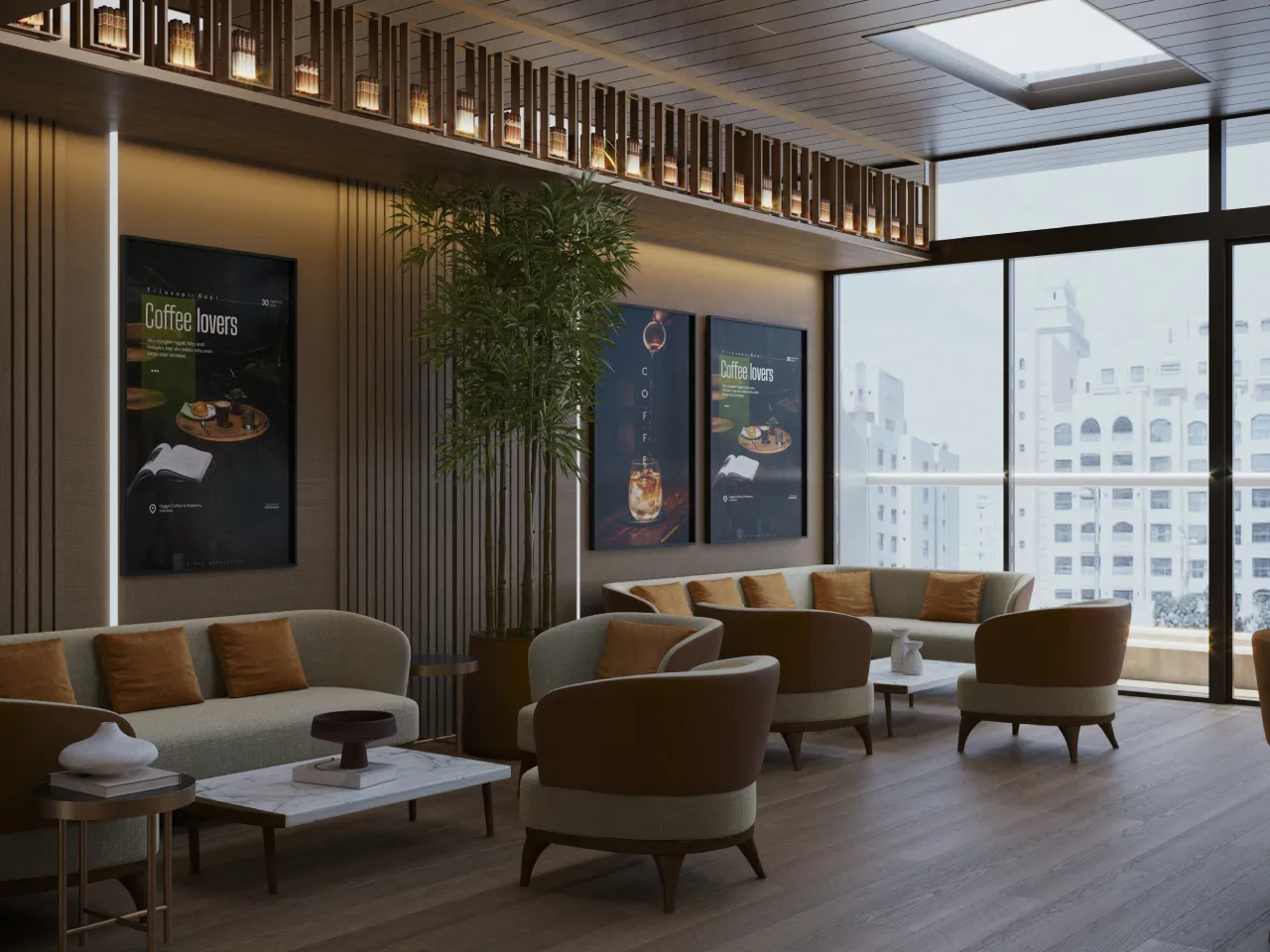
Seating Design: Curved Forms That Soften the Room
The lounge seating introduces softness into a room that has many straight architectural lines. The sofas and chairs have rounded backs, gently curved arms, and low proportions. This gives the guest area a welcoming character and supports longer stays.
The upholstery palette is especially important. The inner seating surfaces are light and textured, creating a comfortable visual base. The outer backs of the chairs use a warmer brown tone, similar to cognac or caramel leather. Matching pillows repeat this warm accent on the sofas.
This repeated caramel tone is used with discipline. It appears on the bar stools, cushions, and chair backs, connecting the lounge and bar areas. Because the color is warm but not too bright, it adds comfort without disturbing the muted palette.
The furniture legs are slim and tapered, giving the chairs a lighter profile. This helps the seating feel refined rather than heavy. In a hotel lounge, furniture must look comfortable but still preserve a sense of openness, especially in a room with multiple seating groups.
The arrangement also supports conversation. Chairs are placed in pairs or around low tables, while sofas provide longer seating surfaces along the walls. The result is a room that can host individuals, couples, small groups, or short business meetings.
Branding Through Interior Details
A hotel lounge design needs a clear identity without feeling like a commercial café inserted into a hotel lobby. This design achieves that balance through subtle branding.
The COFFEE & BAR sign is direct and easy to understand. It gives the lounge a clear purpose. The menu below it reinforces the café function, while the product shelves and display cabinet suggest a curated coffee and bar experience.
The coffee posters in the seating area extend this identity into the lounge zone. They make the guest seating feel connected to the bar, even when guests are not sitting at the counter. The graphics are large enough to be noticed, but they remain restrained in color and style.
The repeated use of warm lighting around the bar also supports the brand atmosphere. Coffee and bar spaces benefit from warmth, and here the light makes the products, signage, and service counter feel inviting.
Color Strategy: A Muted Palette with Caramel Accents
The color palette is carefully balanced. The dominant tones are neutral: taupe, beige, grey-brown, muted wood, and warm off-white. These colors create a sophisticated base suitable for a hotel lounge.
The caramel accents provide warmth and identity. They appear in pillows, bar stools, chair backs, and selected upholstery details. Because this tone repeats throughout the room, it feels intentional rather than random.
The dark poster backgrounds, black-framed graphics, and darker metal details add contrast. They prevent the palette from becoming too soft or washed out. Meanwhile, white marble tabletops and daylight from the windows add brightness.
This palette works well for a coffee and bar concept. It suggests warmth, roasted coffee tones, wood, leather, and soft hospitality comfort without relying on literal café clichés.
Why This Design Works for a Modern Hotel Lounge
This lounge design works because it combines hospitality function with a strong interior identity. The room is not treated as a simple waiting area. It is designed as a multi-use guest space with atmosphere, service, comfort, and brand presence.
The coffee and bar counter gives the room a clear purpose. The lounge seating adds comfort. The vertical slats provide architectural identity. The lighting brings warmth and drama. The greenery softens the structured surfaces. The windows and skylights keep the room open and connected to daylight.
Every major design decision supports the same goal: to create a hotel lounge that feels modern, warm, and memorable, while remaining practical for daily use.